

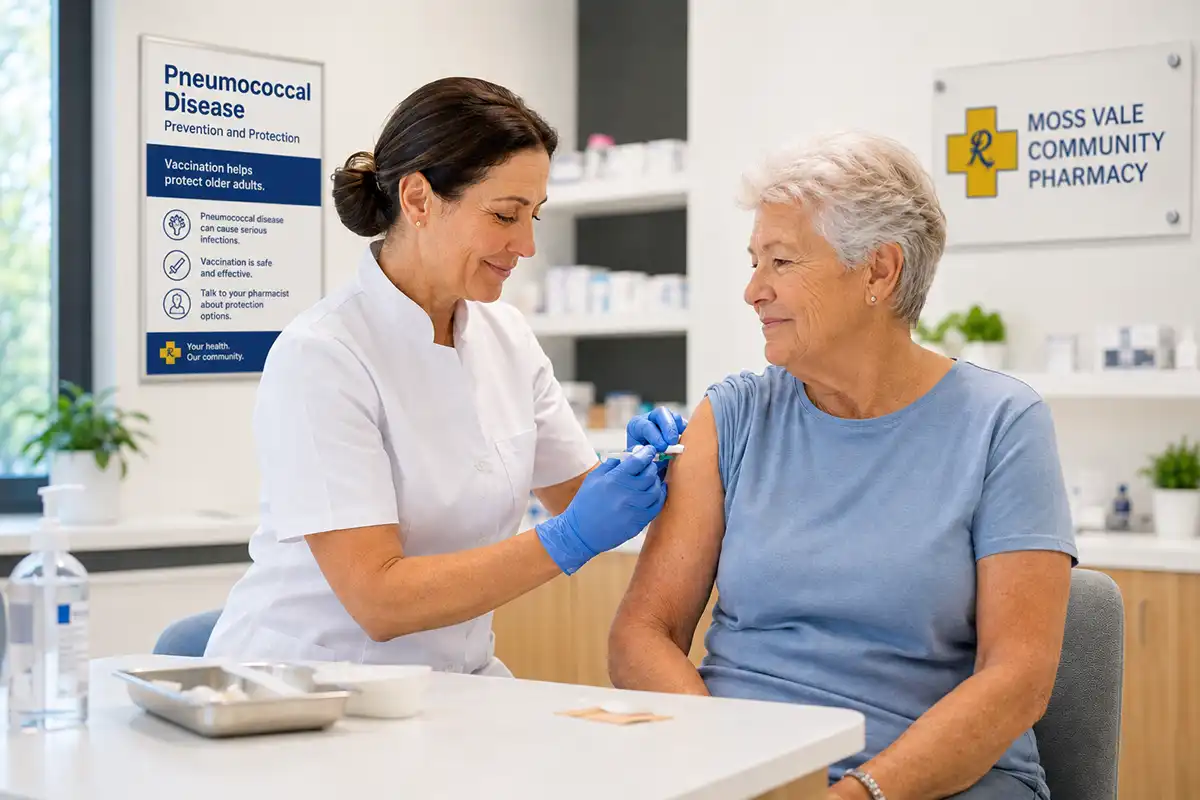
Pneumococcal Disease: Prevention, Protection, and Your Pharmacy
Understanding the risks of this winter illness and how staying up to date with immunisations protects our most vulnerable.
Streptococcus pneumoniae bacteria is a common cause of infection and is responsible for a range of serious illnesses, targeting our most vulnerable residents: small children and the elderly.
Interestingly, these bacteria often live harmlessly in the throats of healthy people, causing no symptoms at all. However, when the immune system is compromised, or when the bacteria spread to more susceptible individuals, they can quickly cause severe infections. At Moss Vale Community Pharmacy, we are dedicated to helping our community stay ahead of the curve through education, accessible vaccination advice, and prompt management of symptoms.
How the Infection Shows Up
Pneumococcal disease is not just one illness; it is a term that covers several different types of infections, depending on where the bacteria decide to take hold in the body. The symptoms vary significantly based on the site of infection and the age of the patient.
- Pneumonia (Lung Infection): The most common severe manifestation, often presenting with a persistent cough, shortness of breath, fever, lack of energy, loss of appetite, headaches, and sharp chest pain.
- Otitis Media (Middle Ear Infection): Very common in young children. Watch for sudden ear pain, excessive crying, tugging or pulling at the ear, fever, irritability, poor hearing, and occasionally accompanying diarrhoea and vomiting.
- Meningitis (Brain and Spinal Cord Infection): This is a medical emergency. Symptoms include a sudden, high fever, severe headache, a stiff neck, nausea, vomiting, and profound drowsiness or confusion.
Who is Most at Risk?
While anyone can contract pneumococcal disease, outbreaks are most common during winter and early spring, particularly in close-contact environments like childcare centres and nursing homes. Those at highest risk include children under two years of age, adults over 65, Aboriginal and Torres Strait Islander people, and individuals who smoke. It is also particularly dangerous for people with chronic conditions (such as lung, heart, or kidney disease, cancer, or HIV), those with weakened immune systems, and individuals who have had their spleen removed or have a poorly functioning spleen.
Prevention: The Power of Vaccination
Because pneumococcal disease can be incredibly severe—and is increasingly resistant to some antibiotics—prevention is far better than a cure. Immunisation is the single most effective way to prevent infection, and the Australian Government provides free vaccines to those who are most at risk.
Vaccinations for Children
- Routine Schedule: The 20-valent pneumococcal conjugate vaccine (20vPCV) is provided free for all children at 2, 4, and 12 months of age. (The first dose can be given as early as 6 weeks).
- Extra Protection: Aboriginal and Torres Strait Islander children, and children medically at risk for severe infection, are recommended to receive an additional dose at 6 months of age.
- Older Children: Those aged 12 months to under 18 years who are diagnosed with an at-risk medical condition are recommended to receive a single dose upon diagnosis.
Vaccinations for Adults
- Seniors: The 21-valent pneumococcal conjugate vaccine (21vPCV) is free and strongly recommended for all non-Indigenous adults aged 65 years and older.
- Aboriginal & Torres Strait Islanders: The vaccine is free and recommended for adults aged 25 years and over.
- At-Risk Adults: Free for any adult aged 18 years and over who has specific medical conditions that put them at risk for a severe pneumococcal infection.
Diagnosis, Treatment, and Public Health
If pneumococcal disease is suspected, a doctor will diagnose it through a physical examination and specific tests, which may include a chest x-ray or laboratory tests on blood, sputum (phlegm), or other fluids.
Treatment primarily involves a course of prescribed antibiotics to clear the bacteria, alongside medicines to control fever and pain, and plenty of fluids to prevent dehydration. Because invasive pneumococcal disease can be life-threatening, laboratories are required to confidentially notify the local public health unit of cases. Public health staff then work with doctors and families to identify risk factors and check vaccination histories to prevent further spread.
How Your Pharmacist Can Help
Your local pharmacy team plays a vital supporting role in managing and preventing respiratory illnesses in the community.
Vaccination Advice
We can help you navigate the Australian Immunisation Register to check your history and determine if you or a loved one are due for a pneumococcal booster.
Antibiotic Management
If you are prescribed antibiotics, we will ensure you understand exactly how to take them to effectively clear the infection and avoid side effects.
Symptom Relief
We can recommend appropriate, safe over-the-counter pain and fever relief for both adults and young children recovering from middle ear infections or pneumonia.
Medical Triage
Unsure if a cough or earache needs a doctor? We can assess mild symptoms and advise you exactly when it is time to seek urgent medical attention.
When to Seek Urgent Help
If you or your child develop symptoms of meningitis (such as a sudden high fever, stiff neck, severe headache, or unusual drowsiness), or if you are struggling to breathe, this is a medical emergency. Call 000 for an ambulance immediately or go straight to your nearest hospital emergency department.
Trusted Resources
For more detailed, evidence-based information regarding immunisation and disease prevention, please explore the following resources:
Helplines and Support
Protect Yourself This Season
Don’t wait until winter takes hold. Chat with our team about your vaccination status, or book your appointment securely online today.
Or call us to book over the phone on
02 4868 1293
Moss Vale Community Pharmacy | 412 Argyle Street, Moss Vale NSW 2577
Clinical facts, symptom profiles, and vaccination schedules detailed in this article are adapted from the official NSW Health Pneumococcal Disease Fact Sheet (Last updated: July 2026).
Medical Disclaimer: The information provided on this page is intended for general health education purposes only. It is not a substitute for professional medical advice, diagnosis, or treatment. Always consult your doctor, pharmacist, or other qualified health professional with any questions you may have regarding a medical condition or medication. If you are experiencing a medical emergency, call 000 immediately. External links are provided for informational purposes and do not constitute endorsement by Moss Vale Community Pharmacy.