

Diabetes
Practical help for day‑to‑day diabetes care – and a clear plan for when you’re unwell
Diabetes management is a long game. Most of the “big wins” come from small, repeatable habits: checking glucose in a way that actually informs decisions, taking medicines consistently, and knowing what to do when illness disrupts your routine. This guide covers the essentials – especially the sick‑day rules that can prevent serious complications.
Emergency: call 000 now
Call 000 immediately for severe breathing difficulty, chest pain, confusion, collapse, or signs of stroke (face droop, arm weakness, speech difficulty). If someone with diabetes is unconscious, having a seizure, or cannot swallow safely, treat as an emergency.
Quick Definitions: Type 1, Type 2 and Gestational Diabetes
- Type 1 diabetes: the body makes little or no insulin. Insulin is required.
- Type 2 diabetes: the body becomes resistant to insulin and/or doesn’t make enough. Management includes lifestyle, tablets and sometimes injections/insulin.
- Gestational diabetes: diabetes diagnosed during pregnancy and managed with a tailored plan with your maternity team.
Monitoring: How to Make Glucose Checks Useful
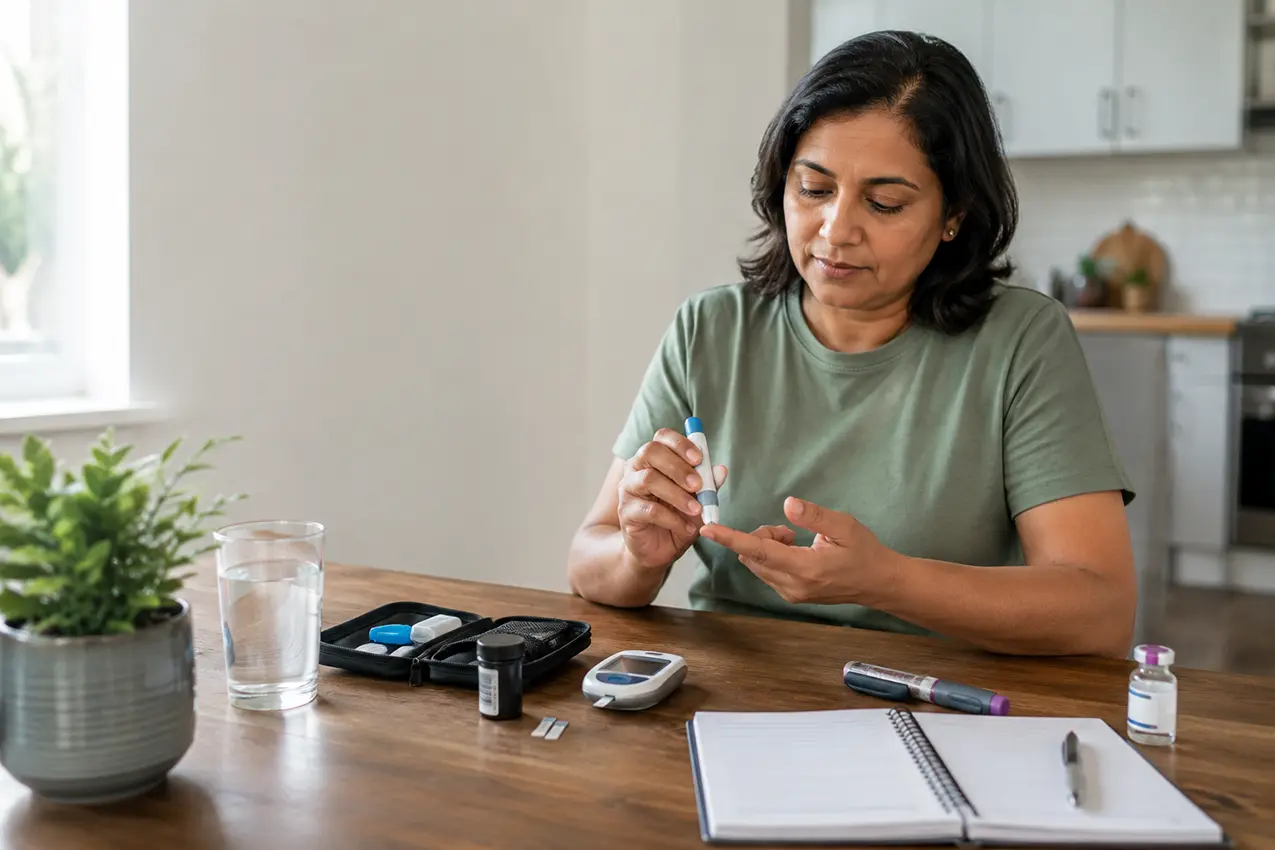
Monitoring is most helpful when it answers a question: Is my treatment working? How does my breakfast affect me? Am I going low overnight? Depending on your treatment, monitoring may include finger‑prick blood glucose, continuous glucose monitoring (CGM), or HbA1c blood tests through your GP.
Finger‑prick glucose (BGL)
- Useful for day‑to‑day decisions, especially if you use insulin or medicines that can cause hypos.
- Most helpful when you record context (food, activity, stress, illness, missed doses).
- Bring your meter in – we can check technique and strip storage.
Continuous glucose monitoring (CGM)
- Shows glucose trends and alerts for lows/highs.
- Can reduce “surprise hypos” and help with pattern spotting.
- Discuss suitability and access through your diabetes team/NDSS pathways.
Ask your GP: what are my targets?
Targets vary by age, pregnancy status, comorbidities and hypoglycaemia risk. Your GP or diabetes team will set personalised goals for HbA1c and daily glucose ranges.
Medicines: The Big Picture (and Common Pitfalls)
Diabetes medicines work in different ways: some improve insulin sensitivity, some increase insulin release, some reduce glucose reabsorption in the kidneys, and some slow digestion and reduce appetite. The best plan is individual – but safe use has a few universal rules.
- 1Take medicines consistently: missed doses are a common cause of “mystery highs”.
- 2Know your hypo risk: insulin and sulfonylureas can cause hypoglycaemia; many other medicines don’t.
- 3Check interactions: some medicines can affect glucose (e.g., steroids) or interact with diabetes therapy.
- 4Never “double up” without advice if you miss a dose – ask us what to do.
Hypoglycaemia (low blood sugar): recognise it early
Common signs include shaking, sweating, hunger, palpitations, irritability, confusion and blurred vision. If you’re at risk of hypos, ask your healthcare team about the “15 grams fast sugar” approach and whether you should carry glucose tablets or gel.
Sick‑Day Basics: Your Plan for When You’re Unwell
Illness, infections and dehydration can drive blood glucose up – and vomiting/poor intake can also cause dangerous lows, depending on your medicines. Australian diabetes guidance emphasises having a written sick‑day plan and knowing when to escalate.
Do (most people)
- Keep checking glucose more frequently (your GP/team can advise the schedule).
- Keep fluids up: small sips often if nauseated; choose sugar‑free fluids unless treating a hypo.
- Keep some carbohydrate intake if possible (e.g., soup, yoghurt, crackers) – especially if using insulin or sulfonylureas.
- Never stop insulin without medical advice (type 1 in particular can become unwell quickly).
- Have ketone testing supplies if recommended (especially type 1 or those on certain medicines).
Seek urgent help if
- Vomiting or unable to keep fluids down.
- Signs of dehydration, drowsiness, rapid breathing, severe abdominal pain.
- High glucose readings that stay high despite your plan.
- Ketones are present (if you have ketone testing), or you suspect diabetic ketoacidosis (DKA).
- You’re unsure what to do with your medicines.
SGLT2 inhibitors (e.g., empagliflozin, dapagliflozin): special sick‑day caution
Some people on SGLT2 inhibitors can develop euglycaemic ketoacidosis (ketones with only mildly elevated glucose), particularly during illness, dehydration, fasting or before surgery. If you take an SGLT2 inhibitor, ask your GP/diabetes team for specific “when to pause” instructions and when to check ketones.
Foot, Eye and Kidney Checks: Prevent Problems Early
Diabetes can affect small blood vessels and nerves over time. Preventive checks – and early action – reduce the chance of long‑term complications.
- Feet: check daily for blisters, cuts, redness or swelling; report non‑healing wounds urgently.
- Eyes: regular eye checks detect diabetic retinopathy early.
- Kidneys: urine and blood tests through your GP help track kidney health.
How Moss Vale Community Pharmacy Can Help
Diabetes care is a team effort. We can support you with practical tools, medicine safety checks and help building routines you can sustain.
Blood Pressure & Heart Risk Support
BP control is one of the biggest levers for reducing diabetes complications.
Medicine Counselling
How to take diabetes medicines, what side effects to watch for, and how to manage missed doses.
Interaction & Safety Checks
Review OTC products and prescriptions that can affect glucose or raise risks in illness.
Medication Reviews
Structured reviews to reduce duplication, simplify schedules, and improve safety.
Monitoring Help
Meter technique, strip storage, and support understanding patterns in your readings.
Sick‑Day Prep
Help building a “sick‑day kit” and knowing when to escalate to your GP or emergency care.
Resources and Support
Trusted Australian resources for diabetes education, NDSS support, and sick‑day guidance:
National support and education
NDSS – National Diabetes Services Scheme Subsidised diabetes products, education and support programs. Diabetes Australia Information, advocacy and practical resources. Healthdirect – Diabetes Overview of types, symptoms, diagnosis and management.Sick‑day guidance and medicines
NDSS – When you’re unwell (sick days) What to monitor, hydration tips and when to seek urgent help. NPS MedicineWise – Diabetes medicines Plain‑English guide to medicine types, benefits and side effects. Healthdirect – Hypoglycaemia (low blood sugar) Symptoms, treatment and when to call for help. TGA – Medicine safety updates Latest safety alerts that may relate to diabetes medicines and devices.Helplines
Need Help With Diabetes Medicines or Sick‑Day Planning?
Bring your medicine list (including supplements) and your glucose meter or CGM details into Moss Vale Community Pharmacy. We can help you build a safer routine and know exactly what to do when you’re unwell.
02 4868 1293Moss Vale Community Pharmacy | 412 Argyle Street, Moss Vale NSW 2577
Medical Disclaimer: The information provided on this page is intended for general health education purposes only. It is not a substitute for professional medical advice, diagnosis or treatment. Always consult your doctor, pharmacist or other qualified health professional with any questions you may have regarding a medical condition or medication. If you are experiencing a medical emergency, call 000 immediately. Information was current at the time of publication and may not reflect the very latest clinical guidelines. External links are provided for informational purposes and do not constitute endorsement by Moss Vale Community Pharmacy.