

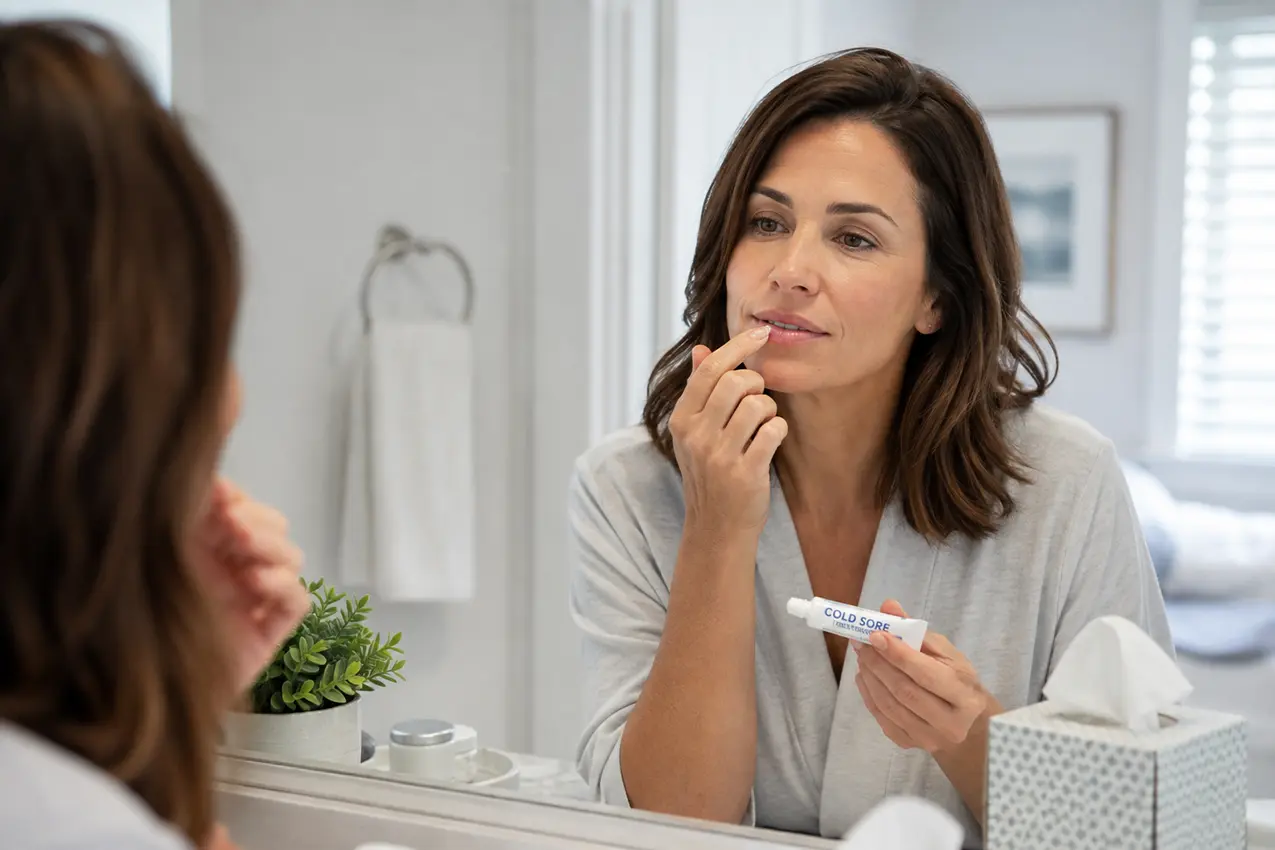
Expert advice from your pharmacist on soothing the sting and speeding up recovery
Cold sores are incredibly common in Australia, with approximately 75% to 80% of adults carrying the virus that causes them. According to Healthdirect, most people are first infected during childhood, often without even realising it. While these small, fluid-filled blisters are usually harmless for most people, the tingling, itching, and visible nature of an outbreak can cause significant discomfort and self-consciousness.
The Southern Highlands climate—with its crisp winters and bright, high-UV summers—can often provide the perfect environmental “triggers” for a dormant virus to wake up. Whether it’s windburn from a walk through Moss Vale or a simple bout of fatigue, understanding how to manage cold sores effectively is the first step toward faster healing and fewer outbreaks.
At Moss Vale Community Pharmacy, we provide a range of over-the-counter medicines and expert guidance to help you manage the virus. This article outlines what causes cold sores, how to recognise the early signs, and the best ways to protect yourself and your family.
What are Cold Sores?
Cold sores, often called “oral herpes,” are small, painful blisters that typically appear on or around the lips, chin, or nose. They are caused by the Herpes Simplex Virus (HSV). Once you are infected with the virus, it remains in your body for life, resting in the nerve cells near the site of the original infection.
Most of the time, the virus is “dormant” (inactive). However, certain factors can cause it to “reactivate,” travelling back down the nerve to the skin’s surface and forming a blister. While there is currently no cure to eliminate the virus from the body entirely, modern treatments can significantly reduce the duration of an outbreak and ease the pain.
The Telltale Tingle
Most people experience a “prodrome” phase before a blister actually appears. This is a characteristic tingling, itching, or burning sensation at the site. This is the most critical time to act; applying antiviral creams during this window can sometimes prevent the blister from forming at all.
The Two Types of Herpes Simplex
There are two main types of the virus. While they were historically associated with different parts of the body, we now know that both types can cause sores in either location.
HSV-1 (Type 1)
- The most common cause of cold sores around the mouth
- Highly contagious through kissing or sharing utensils
- Usually acquired in childhood through non-sexual contact
- Can also cause genital herpes through oral-to-genital contact
HSV-2 (Type 2)
- The most common cause of genital herpes
- Primarily spread through sexual contact
- Can occasionally cause cold sores around the mouth
- Outbreaks of HSV-2 in the oral region are generally less frequent than HSV-1
Causes and Triggers
The initial infection usually occurs through direct physical contact with someone who has an active sore or contact with their bodily fluids (saliva). This includes kissing, skin-to-skin contact, or sharing items like toothbrushes, towels, and drink containers.
Common Outbreak Triggers
Once the virus is in your system, various factors can “trigger” it to become active again. These vary from person to person but often include:
- Environmental Factors: Exposure to strong sunlight, wind, or cold weather (common in the Southern Highlands).
- Physical Stress: Fatigue, illness (like the common cold or flu), or local injury to the mouth or skin.
- Hormonal Changes: Many women find that menstruation can trigger an outbreak.
- Emotional Stress: High levels of anxiety or emotional upset can weaken the immune system’s ability to keep the virus dormant.
A Note on Contagion
Cold sores are highly contagious from the moment the tingling starts until the sore has completely healed and the scab has fallen off. During this time, you should avoid kissing anyone and never share items that come into contact with your mouth. Wash your hands thoroughly after touching the area to prevent spreading the virus to your eyes or other parts of your body.
Signs and Symptoms
An outbreak usually follows a predictable pattern over 7 to 12 days:
- Tingling and Itching: The area feels hot or “buzzy” for about 24 hours.
- Blister Formation: Small, fluid-filled blisters emerge.
- Weeping/Crusting: The blisters may burst or ooze, eventually forming a yellow or brown crust or scab.
- Healing: The scab falls off, usually leaving the skin pink or slightly tender before returning to normal. Cold sores typically do not leave scars.
During a first-time infection, symptoms can be more severe and may include fever, headache, sore throat, or swollen glands.
The Role of Your Pharmacist in Cold Sore Care
Your pharmacist is your most accessible resource for cold sore management. At Moss Vale Community Pharmacy, we can help you choose the right treatment based on the stage of your outbreak and your medical history.
Antiviral Creams
Advice on using Aciclovir or Penciclovir creams to speed up healing, especially when used at the first sign of a tingle.
Hydrocolloid Patches
Discreet, clear patches that cover the sore to reduce the risk of spreading and create an optimal environment for healing.
Pharmacist-Only Medicines
For frequent or severe sufferers, certain oral antiviral tablets may be available through a consultation with our pharmacists.
Pain Management
Guidance on using paracetamol, ibuprofen, or topical anaesthetic gels to manage the pain and discomfort of the sore.
Supplements & Prevention
Information on the evidence regarding Lysine supplements and high-SPF lip balms to help prevent future outbreaks.
GP Referral
If your cold sore is severe, persistent, or near the eye, we provide professional referrals to ensure you get specialist care.
Prevention and Self-Management
While you can’t cure the virus, you can take steps to reduce the number of outbreaks you experience and stop the spread:
- Sun Protection: Use a lip balm with SPF 30+ or 50+ whenever you are outdoors, as UV light is a major trigger.
- Hand Hygiene: Always wash your hands after applying cream to a cold sore or if you accidentally touch it.
- Avoid Triggers: If you know that stress or lack of sleep causes your cold sores to flare, prioritise rest and stress-management techniques.
- Don’t Share: Keep your own towels, cutlery, and lip products during an outbreak.
When to See Your Doctor
Most cold sores heal within two weeks without treatment. However, you should consult your GP if:
- The cold sore has not healed after two weeks.
- The sores are very large, deep, or unusually painful.
- The cold sore is spreading or you have multiple sores.
- The cold sore is near your eye (this can lead to serious complications if the virus affects the cornea).
- You have a weakened immune system (e.g., due to chemotherapy, HIV, or certain medicines).
- You suffer from frequent outbreaks (more than 6 times a year).
Newborn Safety Warning
Cold sores can be life-threatening for newborn babies because their immune systems are not yet developed. If you have an active cold sore, do not kiss any baby. If a baby develops a blister-like rash or appears unwell while someone in the household has a cold sore, seek medical attention immediately.
Resources and Support
Information and Peak Bodies
Healthdirect Australia – Cold Sores Australian Government service providing a complete overview of symptoms, causes, and treatments. Better Health Channel – Cold Sores Detailed Victorian Government resource focusing on contagion and family safety. NPS MedicineWise Information on antiviral medicines and how they work to manage the Herpes Simplex Virus.Helplines and Support
Speak With Your Pharmacist Today
Don’t wait for the blister to appear. If you feel the “tingle” or need advice on discreet healing, visit us in-store for a professional consultation.
02 4868 1293Moss Vale Community Pharmacy | 412 Argyle Street, Moss Vale NSW 2577
Medical Disclaimer: The information provided on this page is intended for general health education purposes only. It is not a substitute for professional medical advice, diagnosis or treatment. Always consult your doctor, pharmacist or other qualified health professional with any questions you may have regarding a medical condition or medication. If you are experiencing a medical emergency, call 000 immediately. Information was current at the time of publication and may not reflect the very latest clinical guidelines. External links are provided for informational purposes and do not constitute endorsement by Moss Vale Community Pharmacy.